Plan the loose pebble layer separately from the base.
Geometry = area × depth · Order volume = geometry × loose-volume multiplier × (1 + waste ÷ 100)
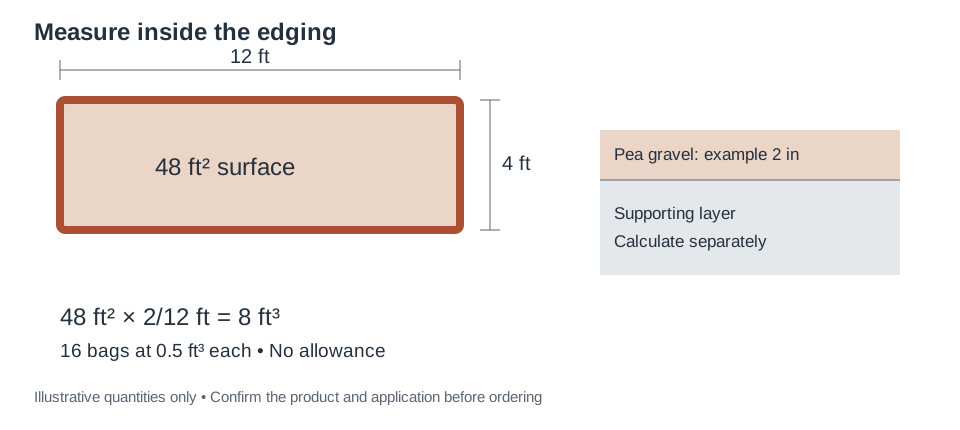
Measure inside the edging
Take the length and usable width of the pebble surface, excluding edging stones and planting pockets. For a tapering path, divide it into shorter rectangles whose widths represent those sections. Save each result separately. A long bounding rectangle can overcount a curved path, so record where you intentionally used an estimate.
Separate pea gravel from crushed base
The surface pebbles and the supporting material perform different jobs. Calculate each specified layer independently, using its own depth, bag label and supplier information. Naming a material pea gravel does not establish that it will lock together, support a vehicle or provide an accessible route. Test the proposed complete surface for the intended walking, furniture and maintenance tasks.
Check the actual product size
Supplier names are not uniform. Southwest Boulder lists both 3/8-inch and 3/4-inch options for its Chamois Beige Pea Gravel. That is a product example, not a universal pea-gravel grading. Confirm the size and sample on your quote; an attractive photograph without a ruler cannot establish particle size or comfortable footing.
Worked path example: volume and bags
The prefilled 12 ft by 4 ft path has an area of 48 ft². An illustrative 2 in layer is 1/6 ft deep, so it needs 48 ÷ 6 = 8 ft³, or 0.296296 yd³. With 0.5 ft³ bags and no allowances, buy 16 bags. The dimensions demonstrate the calculation and do not prescribe an installation depth.
Compare a deeper layer before buying
Changing only that path to 3 in gives 12 ft³, or 24 half-cubic-foot bags: 50% more volume. Do not choose a deeper loose layer simply because more material seems better. Check how the proposed depth affects movement and furniture stability, then use the chosen project specification as your input.
Metric example and a quote comparison
A 5 m by 1.2 m path with a selected 40 mm layer needs 0.24 m³, or 240 litres. At 20 litres per bag that is 12 bags before adjustments. If your own quote is £8 per bag, the material line is £96; this example price is invented arithmetic. Compare delivery charges and minimum orders separately when assessing a bulk quote.
A ton estimate needs the right density
Leave density blank to receive volume and volume-bag results only. If the supplier sells by weight, request loose delivered bulk density for the exact pebble product and moisture condition, in kg/m³ or lb/ft³. Solid-rock density excludes the spaces between stones and is unsuitable. Keep US short tons and metric tonnes distinct when comparing quotes.
Top up only what is missing
Inspect the existing path in several places. Where some usable gravel remains, enter the additional layer you intend to add, not the original full build-up. Calculate bare patches separately from thin top-ups. If the layer has become mixed with soil or needs rebuilding, settle that material decision before treating the whole old layer as reusable.
Finish with a delivery-ready record
Save the estimate with a short label such as Side path surface. Add the separately calculated base only if your plan calls for it. Print the list with dimensions, bag size and adjustments, and give the supplier the actual product name and size. Confirm access for the delivery and keep different aggregate piles apart.
Before you place an order
Check dimensions, bag yield and the price basis. Whole bags round up; bulk orders may have minimum quantities or delivery charges that this calculator does not include. All adjustments are your inputs. Read our method, unit definitions and limits.
Material references
Reviewed 8 October 2026. Product examples explain terminology; no universal density or depth is inferred.
Useful questions
How many square feet will one cubic yard cover?
Divide 27 ft³ by your chosen depth in feet. At an illustrative 2 in it covers 162 ft² before allowances; at 3 in it covers 108 ft². These are geometric comparisons, not recommended depths.
Can I use a 50 lb bag?
Yes, select lb as the bag unit and enter the supplier’s compatible loose bulk density. The tool will reject a mass-labelled bag without density rather than guess its volume.
Does waste include compaction?
No. The ordering buffer and loose-volume multiplier are separate and each is applied once. Leave them at zero and one unless you have a justified project input.