Calculate the compost added, not all the soil underneath.
Geometry = area × depth · Order volume = geometry × loose-volume multiplier × (1 + waste ÷ 100)
Choose the job before the quantity
Finished compost can be applied at the surface or incorporated during suitable soil preparation. University of Maryland Extension distinguishes these uses in its soil-amendment guidance. Select a rate appropriate to the plants, soil information and product. This calculator measures an application; it does not determine nutrient requirements or choose an amendment rate.
Enter the applied thickness
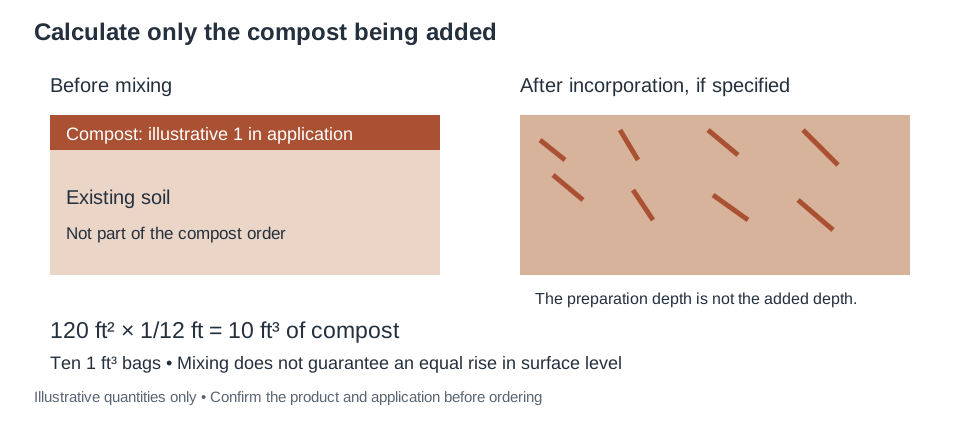
For top-dressing, measure the area receiving compost and the thickness you plan to spread. For incorporation, enter the equivalent loose compost layer being added before mixing, not the full depth of the soil you will work. Applying 1 in over a bed and incorporating it into a deeper zone does not mean buying enough compost to fill that entire zone.
Worked application example
A 12 ft by 10 ft bed is 120 ft². At an illustrative 1 in application, 120 × 1 ÷ 12 = 10 ft³, or 0.370370 yd³. Ten bags labelled 1 ft³ provide that nominal volume without an extra allowance. These are the prefilled calculator inputs, not a prescription for every bed.
A metric example with whole-bag rounding
For a 4 m by 2 m area and an illustrative 2 cm addition, use 4 × 2 × 0.02 = 0.16 m³, or 160 litres. With 50-litre bags the order is four whole bags, providing 200 litres. Three bags leave a 10-litre shortage. The spare 40 litres is a consequence of bag size, not an instruction to spread a thicker layer.
Keep a soil blend separate
For a specified loose-volume recipe, calculate its compost component separately. A 0.8 m³ batch containing 25% compost by component volume uses 0.2 m³, or 200 litres, of compost and 0.6 m³ of the other specified component. That ratio is an arithmetic example, not a growing-medium recommendation. The sum of loose component volumes need not predict the exact settled volume of a mixed product.
Do not convert a soil test percentage into a recipe
Maryland Extension explains that soil organic matter is measured by weight. A soil report percentage therefore does not mean the same percentage of your bed volume should be replaced by compost. Use the soil report and suitable growing guidance to make the application decision; use this tool afterward to turn the selected application into a quantity.
Check compost maturity and the label
Ask what the compost is made from, the intended application and what product testing is available. Finished compost and an active heap of partly decomposed scraps are different starting materials. Keep the product name and intended use on your order. A bag of compost-based growing medium is also not automatically equivalent to a bag of soil amendment.
Buy by volume when the label provides it
Enter the stated litres, cubic feet or cubic metres directly for volume bags. Moisture affects weight, so a guessed universal compost density can make a mass-based comparison misleading. If buying by kg or lb, obtain the supplier’s loose bulk density for that product and condition. The weight field stays empty until you supply it.
Record separate beds and separate materials
Use identical-area count only when the areas and application depths match. For different beds, calculate and save each line separately. Mulch placed over the amended soil is another material order, not extra compost volume. Print your plan before ordering and record where any whole-bag surplus will be stored or used under a separate appropriate plan.
Before you place an order
Check dimensions, bag yield and the price basis. Whole bags round up; bulk orders may have minimum quantities or delivery charges that this calculator does not include. All adjustments are your inputs. Read our method, unit definitions and limits.
Material references
Reviewed 8 October 2026. Product examples explain terminology; no universal density or depth is inferred.
Useful questions
Does this calculate ingredients for making compost?
No. This tool estimates finished compost to apply to an area. It does not balance carbon and nitrogen or predict the yield from a composting pile.
Can I fill a raised bed entirely with the result?
Only if that is the specified material for the whole fill. A compost application and a complete growing-medium fill are different tasks. Use the raised-bed soil calculator for total internal fill volume and choose the medium separately.
Will the soil rise by the depth I enter?
Not necessarily when compost is incorporated. The calculated volume is the loose application quantity; mixing and settling change how the components occupy space.