 Rob
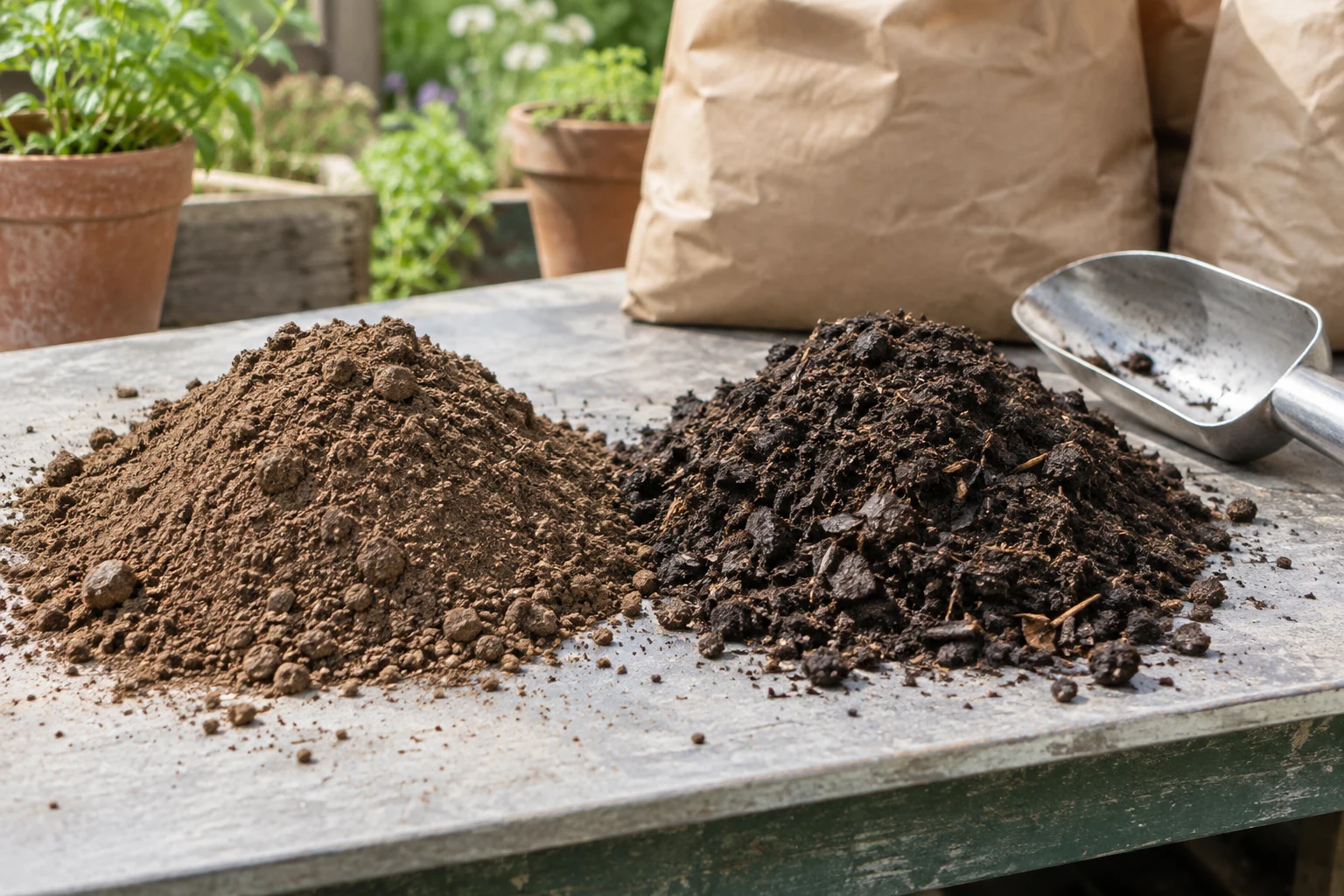
Topsoil and garden soil are not dependable substitutes based on the front of the bag alone. “Topsoil” may describe a bulk mineral soil or a marketed blend. “Garden soil” often describes a formulated product intended to be mixed with existing in-ground soil. Read the ingredients, intended use and application instructions before comparing price or coverage.
| Label says | Typical decision to check | Do not infer |
|---|---|---|
| In-ground amendment | How much to mix with existing soil | Ready-to-use container fill |
| Raised-bed / garden blend | Which bed bases and instructions it covers | Every similarly named mix is equivalent |
| Container or potting mix | Container size, drainage and product directions | Bulk topsoil will behave the same |
The practical question is what the material must do in your project. Filling a ground-connected bed, amending an existing border and filling a patio container require different information. This guide turns that question into a buying checklist and shows how the instructions change the quantity calculation.
Read the intended-use statement first
Look for explicit wording about in-ground planting, raised beds, containers or mixing with native soil. An attractive photograph of flowers does not tell you which of those uses is intended. If the product says it is an amendment, do not treat the package volume as ready-to-use standalone growing medium.
For example, the manufacturer’s current Miracle-Gro Organic Raised Bed & Garden Soil page describes raised-bed and in-ground use. Its FAQ recommends a separate container mix for pots. This is one documented product example, not an endorsement or a rule for every bag called garden soil. Read the instructions on the exact product you are buying.
The product in your local store may have a different formula, regional label or later revision. Match the exact name and package information. A short online listing can omit the very restriction that determines whether the product suits the job.
Separate the material description from performance claims
If the job is improving existing soil rather than adding bulk, compare topsoil and compost for filling and improving beds before choosing what to order.
Copy the ingredient description, net volume, fertilizer information and intended use into your notes. Keep promotional claims in another field. A promise about plant growth does not tell you whether the product can fill an entire bed without mixing.
If fertilizer is included, note its analysis and the instructions rather than adding another feeding program by habit. The presence of compost is also relevant: a product already amended with compost should not automatically receive the same extra amount as unamended mineral soil.
Terms such as premium, rich or professional do not specify particle size, pH, nutrient content or origin. Ask for those details when they matter to the project. If the answer is unknown, keep it unknown in the comparison rather than converting the adjective into an assumed specification.
| Field | Why it matters | Question if missing |
|---|---|---|
| Intended use | Determines whether it is fill, amendment or container medium | Can this product be used alone here? |
| Ingredients and added fertilizer | Avoids double-counting amendments | What is already included? |
| Net volume | Supports coverage and bag calculation | Is the quoted bag volume the supplied yield? |
| Mixing directions | Changes the amount purchased | Is the ratio by volume, and what existing soil is assumed? |
| Source and analysis | Helps evaluate bulk soil quality | Which current stockpile does the report describe? |
Bulk topsoil needs a specification too
Utah State University's topsoil guidance identifies texture, salts, pH, organic matter and coarse fragments among relevant quality properties. Its central buying point is that appearance cannot replace those checks. A dark screened pile can still be unsuitable for a particular planting.
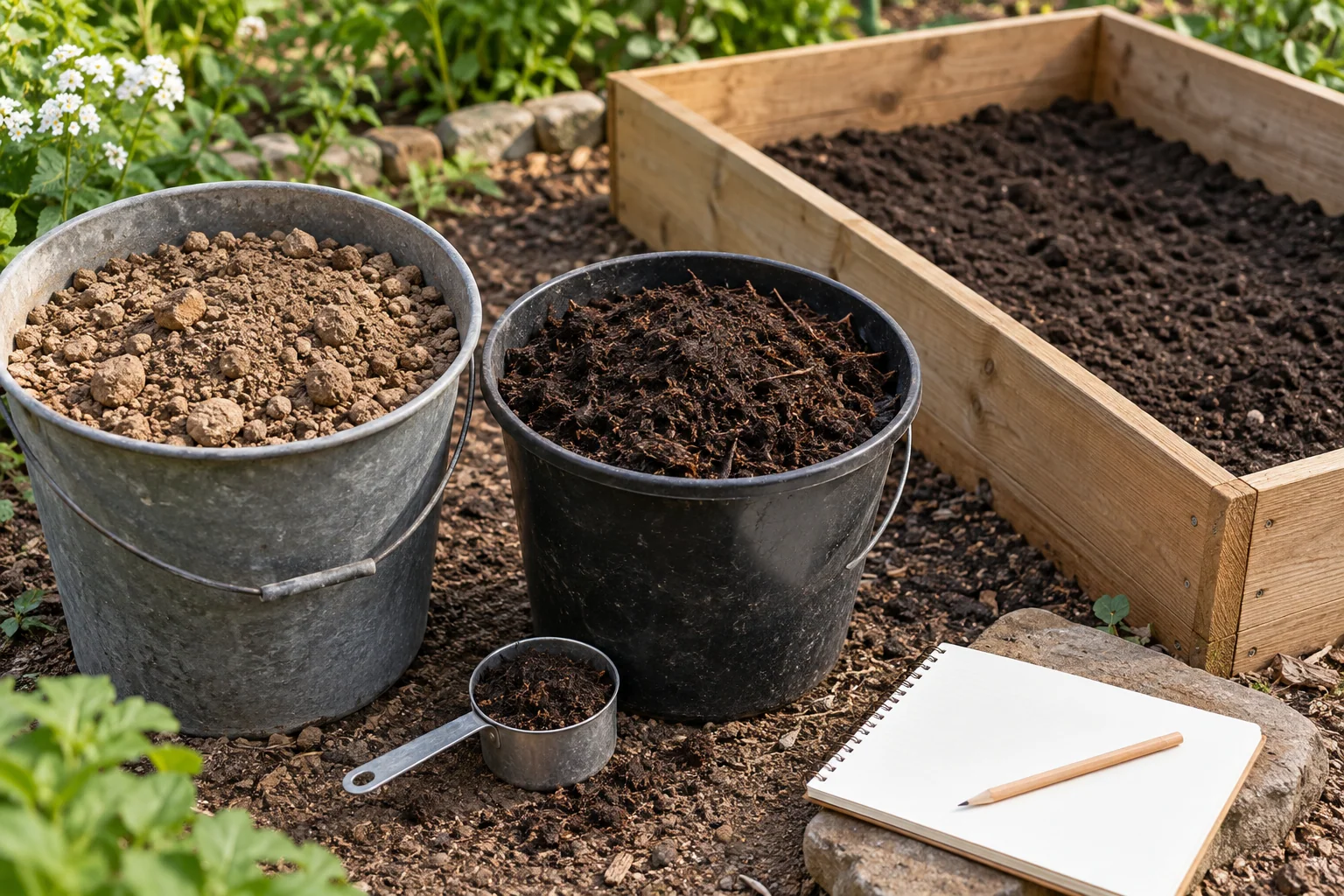
Ask where the material comes from and whether it is natural soil, manufactured soil or an amended blend. Request a representative sample and current analysis where appropriate. A sample from the top of one display bucket is not necessarily representative of a large changing stockpile.
Describe your intended use to the supplier. “I need a soil component for a ground-connected vegetable bed” is more informative than “I need good dirt.” If the supplier recommends a product, ask what properties or instructions support that recommendation.
Worked example: an amendment layer
Inputs and calculation
Suppose the selected product's instructions and your bed plan call for a 3-inch applied layer to be mixed into existing soil. A 10-foot by 6-foot bed has 60 square feet. The purchased amendment requirement is 60 × 3 ÷ 12 = 15 cubic feet.
If bags contain 1.5 cubic feet, ten bags supply that applied volume. The calculation concerns material added before mixing. It does not promise that the final bed surface will rise exactly 3 inches, because mixing, particle arrangement and subsequent settling affect the final profile.
Interpret the purchase
Do not also calculate the volume of existing soil and buy it again. If the directions say to work the amendment into the upper existing layer, that native soil is already present. Confusing mixing depth with purchase depth can produce a substantial over-order.
Worked example: filling a new volume
Inputs and calculation
Now suppose a different, suitable ready-to-use bed blend will fill an empty ground-connected frame measuring 6 feet by 3 feet internally to a chosen depth of 8 inches. The geometric space is 6 × 3 × 8 ÷ 12 = 12 cubic feet.
Eight 1.5-cubic-foot bags meet that preliminary volume. This is a standalone fill example for a product whose instructions permit it. The amendment product in the preceding example cannot be substituted simply because it has the same package size.
Interpret the purchase
Keep any supplier-supported yield adjustment separate from the geometry. If the material settles after placement, remeasure the deficit or use a compatible documented yield. Do not add an invented universal compaction percentage to every bagged soil purchase.
Compare the project cost after checking suitability
Imagine a hypothetical 1.5-cubic-foot bag at $6 and a 2-cubic-foot bag at $7.20. Their unit prices are $4 and $3.60 per cubic foot. For a 15-cubic-foot requirement, ten smaller bags cost $60, while eight larger bags supply 16 cubic feet and cost $57.60.
The larger bag remains cheaper in this example after rounding, but it also leaves an extra cubic foot. These invented prices illustrate comparison arithmetic; they are not current retail quotations. Include delivery and other charges when comparing an actual order.
Only make this cost comparison between products that can perform the specified job. A cheaper amendment is not an equivalent substitute for a complete growing medium, and a premium bag is not automatically better for a project that needs a suitable bulk mineral-soil component.
Do not turn a pot into an in-ground bed by changing the label
University of Minnesota Extension distinguishes potting media from heavy garden soil and topsoil for containers and elevated boxes. The environment around the roots matters. A product appropriate in contact with garden soil is not automatically appropriate in a pot.
Describe raised structures accurately when asking for advice. An open-bottom frame on garden soil, a planter sitting on paving and a box raised on legs may all be called raised beds in conversation. Explain the base and drainage arrangement rather than relying on that shared phrase.
For container projects, compare suitable potting media and the container's requirements. The topsoil and potting-soil comparison develops that distinction and the associated fill calculations.
Inspect the supplied material before spreading it
Keep a copy of the accepted product description and delivery ticket. Check whether the delivered product matches the order before it is mixed into the bed. If a load contains unexpected debris or differs visibly from the agreed sample, contact the supplier while it remains identifiable.
Photograph the whole load and representative details, not just one isolated clod. A useful record shows what was supplied and how widespread the concern appears. Avoid making an unsupported contamination claim from color alone, but do not bury obvious unresolved problems beneath plants either.
For bags, retain at least one label and any batch information. This makes a later question about ingredients or instructions much easier to answer. Photographing the label before it becomes wet or torn takes little effort and avoids searching for an uncertain online equivalent later.
Use a buying note that can be checked
- The soil label comparison sheet records intended use, ingredients, mixing instructions, volume and price. Complete it for the actual candidates and mark any unanswered question that affects suitability.
- A useful final note might read: “In-ground amendment for this existing bed; apply the specified layer and mix as directed; 15 cubic feet required; ten 1.5-cubic-foot bags; fertilizer already included.” A fill project should instead state the internal dimensions and permitted standalone product use.
- Keep the application instructions with the quantity list when someone else will do the work. Fifteen cubic feet delivered to the correct address is still an incomplete instruction if the installer does not know whether it is to be mixed into soil or used as a separate fill.
Ask a product question that can be answered
Send the supplier a concise description of the location: an open-bottom ground-connected bed, an in-ground amendment area or a container with a solid base. Include the planned crop or planting and the label of the proposed product. Asking whether it is suitable for that specific situation is more useful than asking whether garden soil is good. Retain the answer with the product name so it is not accidentally applied to another blend.
What if the label remains unclear?
When comparing a bulk supplier with a bagged product, write the information in the same order even if the paperwork looks different. The bulk supplier may provide a separate analysis, while the bag combines ingredients and directions on its back panel. A missing printed bag does not itself mean poor quality, and polished packaging does not replace relevant evidence.
Check whether an online answer describes the exact region where the product will be bought. Formulations and product names may vary by market. Save the response and the label together if the distinction affects the project. A general answer about a brand is less useful than an answer tied to the package identifier.
For a contractor-supplied material, ask for the same information before installation. Include the accepted description in the quote so that “garden soil included” does not become an open-ended substitution. This also makes later maintenance easier: the record can identify what was placed instead of relying on the appearance of the finished bed.
Ask the manufacturer or supplier the narrow unresolved question: whether the product may be used alone in the specific bed, whether it contains mineral soil, or how its coverage assumes mixing. Provide the exact product identifier and a description of the project so the answer is tied to the right material.
If the answer cannot be established, choose a product with a clear suitable specification rather than guessing from the name. The same discipline applies when a substitute is offered at delivery: compare its actual instructions before accepting it as equivalent.
The best distinction is therefore functional. Topsoil is evaluated as a soil material; garden soil is evaluated as the particular labelled formulation on offer. Their names start the comparison, while the composition, instructions and site determine the purchase.
Sources and further reading
- Miracle-Gro Organic Raised Bed & Garden Soil — manufacturer instructions and container FAQ — source reviewed 2026-10-10.
- Topsoil Quality Guidelines for Landscaping — Utah State University — source reviewed 2026-10-07.
- Starting your garden and containers off right — UMN Extension — source reviewed 2026-10-07.