 Rob
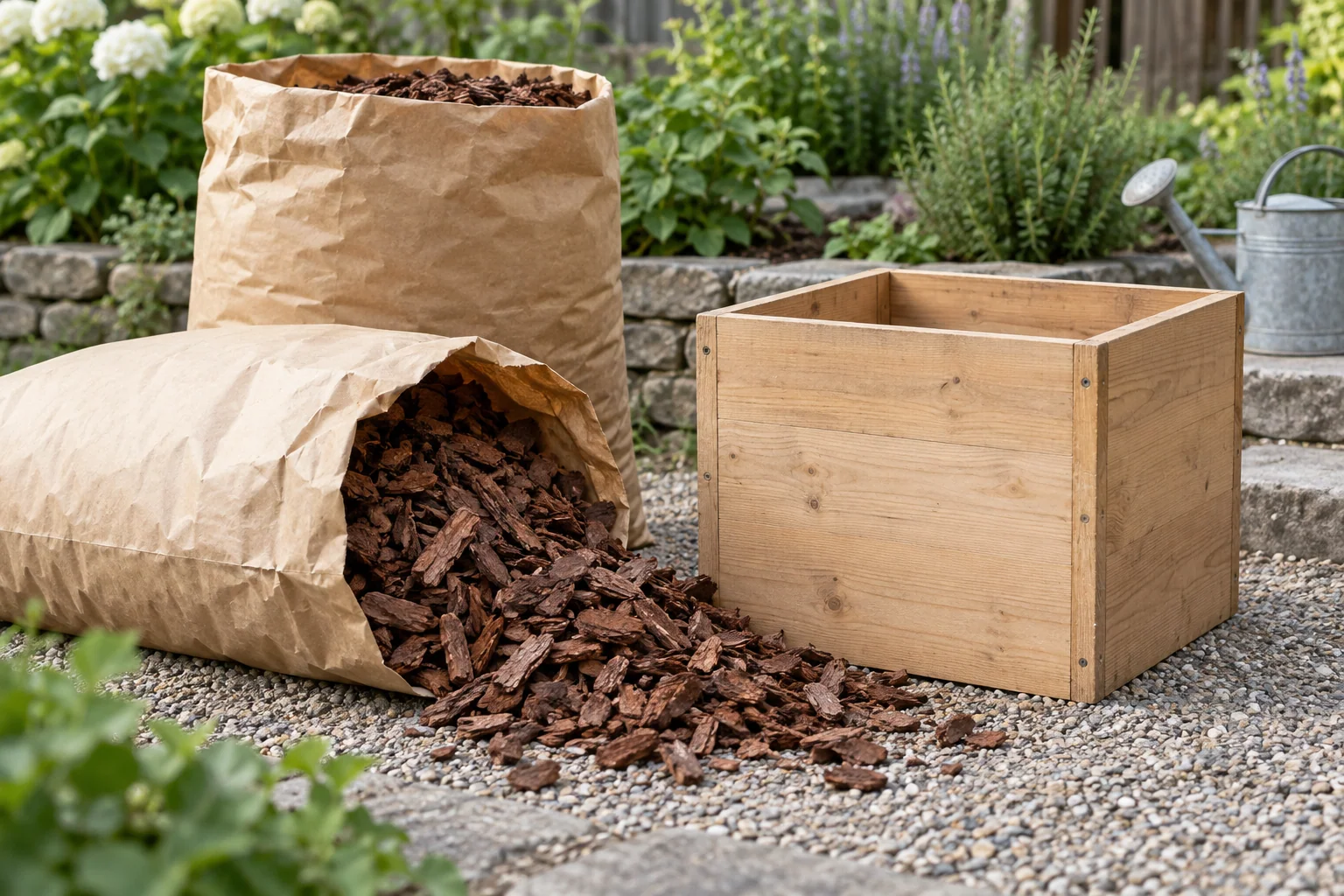
One cubic yard contains 27 cubic feet. For mulch labelled by volume, divide 27 by the bag volume in cubic feet. That gives 13.5 bags at 2 cubic feet each, so you need 14 whole bags to buy at least a cubic yard. Three-cubic-foot bags divide evenly: nine bags make one cubic yard.
| Stage | What to use | Why |
|---|---|---|
| Find required volume | Area × additional depth | Use compatible units |
| Combine areas | Unrounded compatible volumes | Avoid rounding each small bed separately |
| Buy bags | Round total volume ÷ bag volume upward | A part bag still requires a whole purchase |
The conversion describes volume, not weight, and it does not depend on whether the mulch is pine bark or wood chips. Use the labelled volume on the particular bag. For a complete garden estimate, the material bag coverage calculator connects bag size, area and depth without needing a guessed mulch density.
Bag counts for one cubic yard
| Labelled bag volume | Exact bag equivalent | Whole bags to cover at least 1 yd³ | Purchased volume |
|---|---|---|---|
| 1 cubic foot | 27 | 27 | 27 cubic feet |
| 1.5 cubic feet | 18 | 18 | 27 cubic feet |
| 2 cubic feet | 13.5 | 14 | 28 cubic feet |
| 2.5 cubic feet | 10.8 | 11 | 27.5 cubic feet |
| 3 cubic feet | 9 | 9 | 27 cubic feet |
These are volume examples, not a claim that every store stocks every size. Fourteen 2-cubic-foot bags exceed a cubic yard by 1 cubic foot. Saying simply “fourteen bags equal a yard” loses that distinction. It is harmless for a rough conversation, but the extra matters when comparing costs or deciding what to do with leftover mulch.
The cubic conversion follows the dimensions of a yard: 3 feet long, 3 feet wide and 3 feet high make 3 × 3 × 3 = 27 cubic feet. A square yard is only an area. Multiplying an area by an explicitly chosen depth is what turns a surface measurement into a mulch volume.
Metric bags need a metric conversion
A cubic yard is approximately 0.764555 cubic meter, or 764.555 liters. The cubic-yard conversion appears in NIST's metric conversion tables. Dividing this volume by a 50-liter bag gives about 15.29 bags, so 16 whole 50-liter bags provide 800 liters. A 40-liter label gives about 19.11 bags, meaning 20 whole bags.
Do not mistake a cubic meter for a cubic yard when comparing a UK supplier's quote with a US calculator result. One cubic meter is 1,000 liters, so it takes twenty 50-liter bags. The same bag therefore produces different counts for those two bulk units. Write the unit next to every quoted number.
A “bulk bag” or “jumbo bag” is a packaging description, not a fixed volume. If the seller specifies liters or cubic meters, use that value. If it lists only kilograms, you cannot reliably use the table above without a suitable density or coverage figure for that product and condition.
Calculate the whole project before rounding bags
- Suppose a planting bed needs 0.6 cubic yard and a second needs 0.4 cubic yard of the same mulch. Together they need exactly one cubic yard, or 27 cubic feet. Buying 2-cubic-foot bags requires 14 bags overall. Rounding the two beds separately produces nine bags for the first and six for the second: fifteen bags.
- Separate rounding is reasonable if the jobs happen at different times or use different products. When you will use one product on the same day and can share an opened bag, adding the unrounded volumes first avoids unnecessary surplus. Keep the bed-by-bed volumes on the spreading plan even when the purchase is combined.
- For the same reason, do not round 0.94 cubic yard to one yard and then add a margin to the rounded value without thinking about what you have already added. Keep the measured geometry, any chosen allowance and the final whole-bag decision as separate steps.
Worked example: from bed measurements to bags
Inputs and calculation
A new bed measures 15 feet by 12 feet. Its owner has chosen a 2-inch mulch layer after checking the planting and material. The area is 180 square feet; multiplying by 2 ÷ 12 gives 30 cubic feet. Dividing by 27 gives approximately 1.1111 cubic yards.
For 2-cubic-foot bags, the count is exactly 15. If a deliberately selected 5% allowance is added for the measured irregular edge, the order quantity becomes 31.5 cubic feet. That requires 15.75 bags, rounded up to 16. Those 16 bags contain 32 cubic feet, so the purchase exceeds the adjusted quantity by half a cubic foot.
Interpret the purchase
The 5% in this example is a planning choice, not a recommended rate for all gardens. If the rectangle was already generously measured to include the irregular border, adding a further margin could count the same uncertainty twice. Improve the measurement where practical before deciding how much extra is justified.
Worked example: compare bags with a bulk quote
Inputs and calculation
Imagine a one-cubic-yard requirement and a bag price of $4.20 for 2 cubic feet. Fourteen bags cost $58.80 and supply 28 cubic feet. A hypothetical bulk offer is $38 per cubic yard plus $35 delivery, totaling $73 for a one-yard delivery. These are invented prices for demonstrating the comparison, not current market quotes.
Under those assumptions, bags cost $14.20 less for this single-yard order. If the requirement becomes three cubic yards, bags need 81 ÷ 2 = 40.5, rounded up to 41. They cost $172.20. If the same delivery fee applies to three yards, bulk costs $114 + $35 = $149. The result changes because delivery is spread across more material.
Interpret the purchase
Before choosing, check minimum order, delivery limits, taxes and access. Also compare the actual material: shredded hardwood and coarse arborist chips are not interchangeable purchases merely because both occupy a cubic yard. A sample, ingredient description and usable delivery position may matter more than a small difference in calculated unit price.
Use bag volume to check coverage
If you already own some unopened bags, subtract their labelled combined volume before rounding the additional purchase. For a 27-cubic-foot job with three 2-cubic-foot bags in hand, the remaining requirement is 21 cubic feet. Eleven more bags supply 22 cubic feet, bringing the total available to 28. Subtracting “three bags” after changing to a different bag size would not preserve that arithmetic.
For a 2-cubic-foot bag spread 2 inches deep, divide 2 cubic feet by 2 ÷ 12 foot. The result is 12 square feet. At 3 inches deep, that bag covers 8 square feet. The bag has not changed; the chosen thickness has. This is why a prominent coverage claim needs its associated depth.
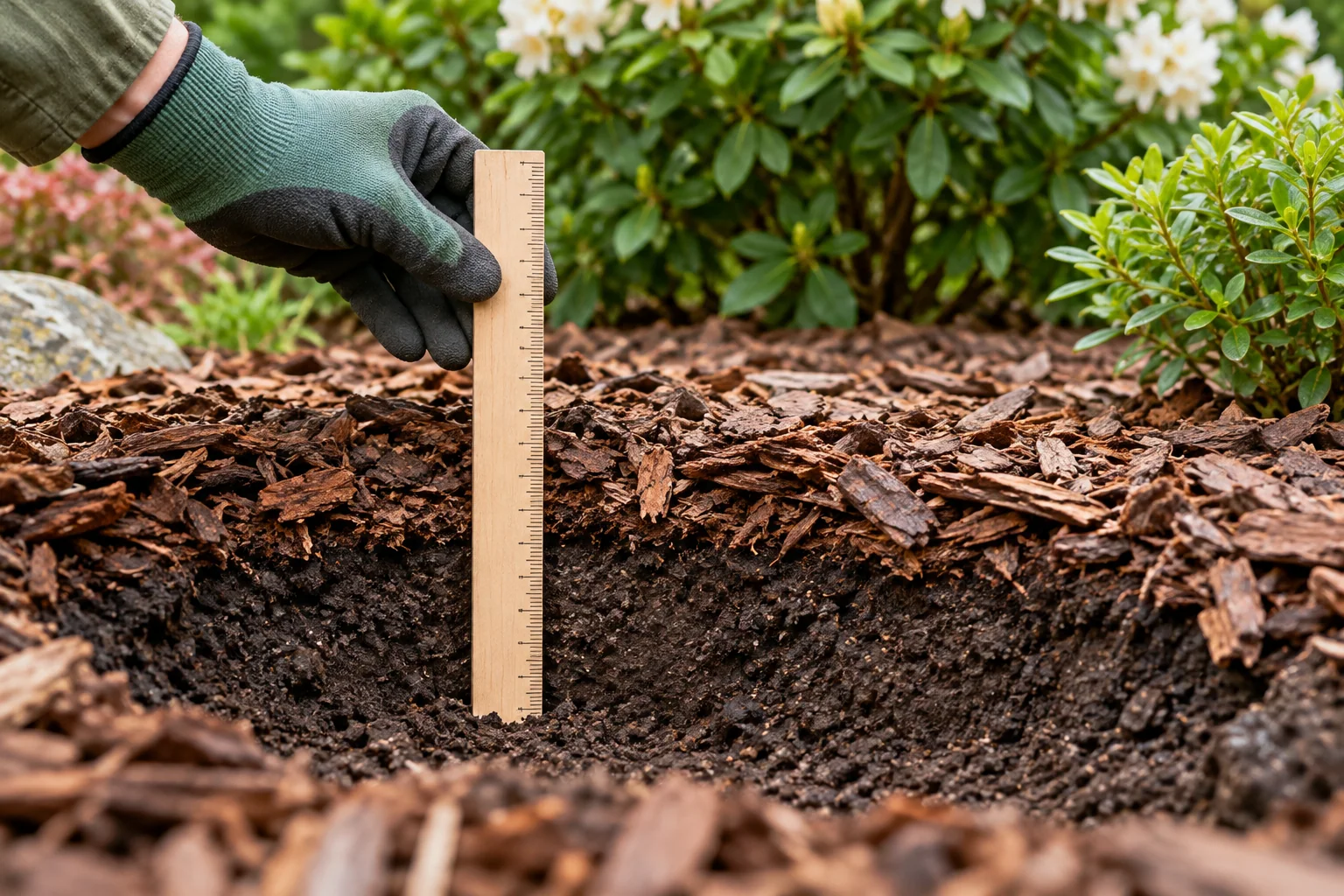
Apply the coverage to a test section before emptying every bag. Mark the intended area, spread evenly and check the actual depth. Lumps, an irregular soil surface or existing mulch can make a visual estimate misleading. The calculated amount belongs across the measured area rather than in a decorative mound at its center.
Common shopping mistakes
Keep promotional bundles on their own comparison row. A discount for buying several bags changes price, but the total supplied volume still comes from the actual number and size of those bags.
The bag comparison sheet has separate spaces for required volume, purchased volume and total price. Enter each competing bag size on its own row. That makes a promotion on smaller bags comparable with an ordinary price on larger ones and preserves the effect of whole-bag rounding.
First, avoid equating pounds with cubic feet. Moisture and product composition affect mulch mass, so a heavier bag is not automatically a larger-volume bag. Second, read the size on every product when comparing prices; packaging can look similar despite different contents. Third, account for usable old mulch before buying a complete new layer.
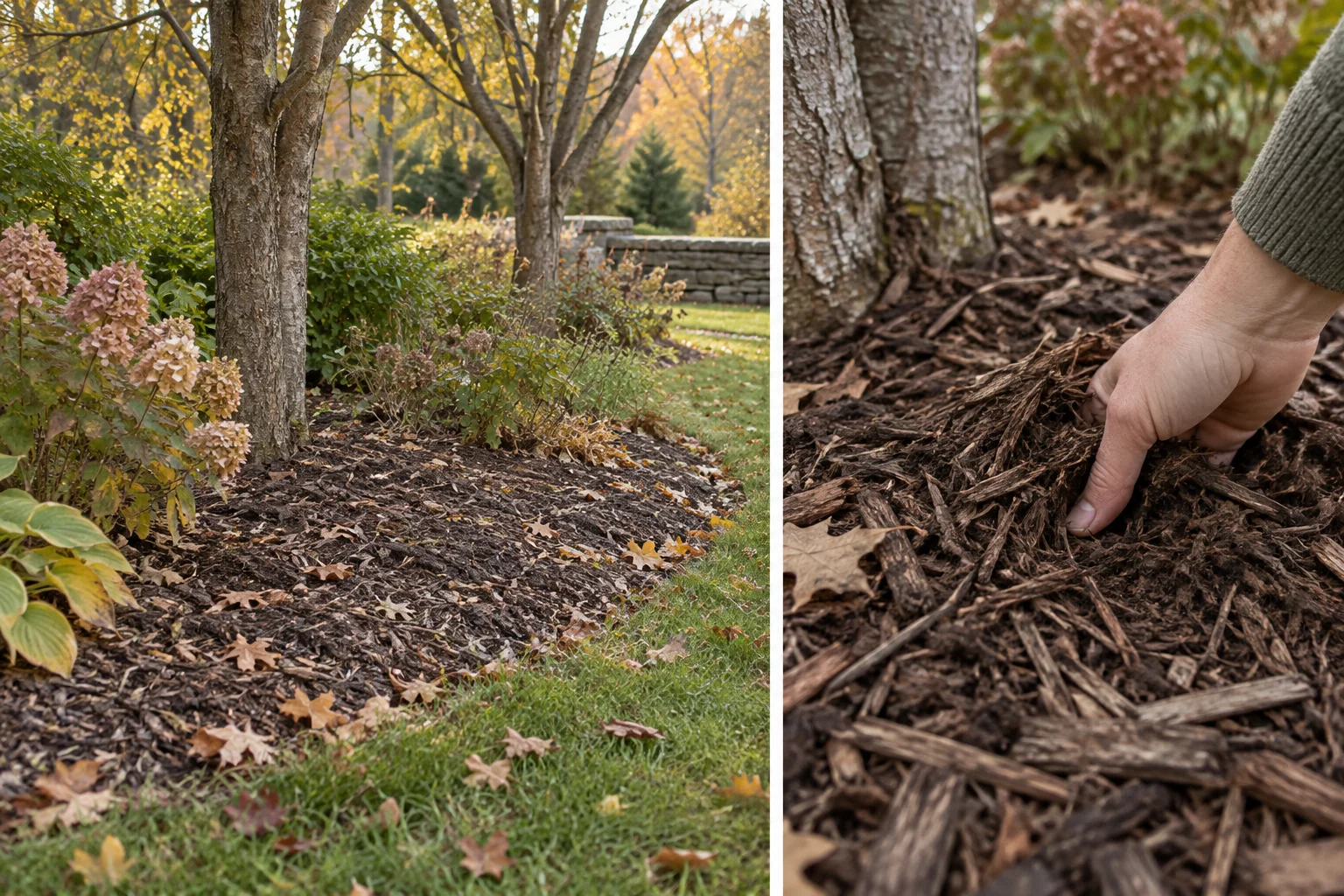
Finally, keep surplus separate from required depth. In the one-yard example, fourteen bags leave a cubic foot beyond the exact quantity. Use it on another suitable measured patch or retain it according to the product's storage directions. Do not spread it automatically around the nearest tree trunk.
A useful purchase note reads “27 cubic feet required; 2-cubic-foot bags; 14 bags purchased; 28 cubic feet supplied.” That short record distinguishes the need from the package count and makes a later price comparison easy to repeat without relying on an ambiguous statement about how many bags are “in a yard.”
Sources and further reading
- NIST Special Publication 1038: SI Conversion Factors for General Use — source reviewed 2026-10-07.